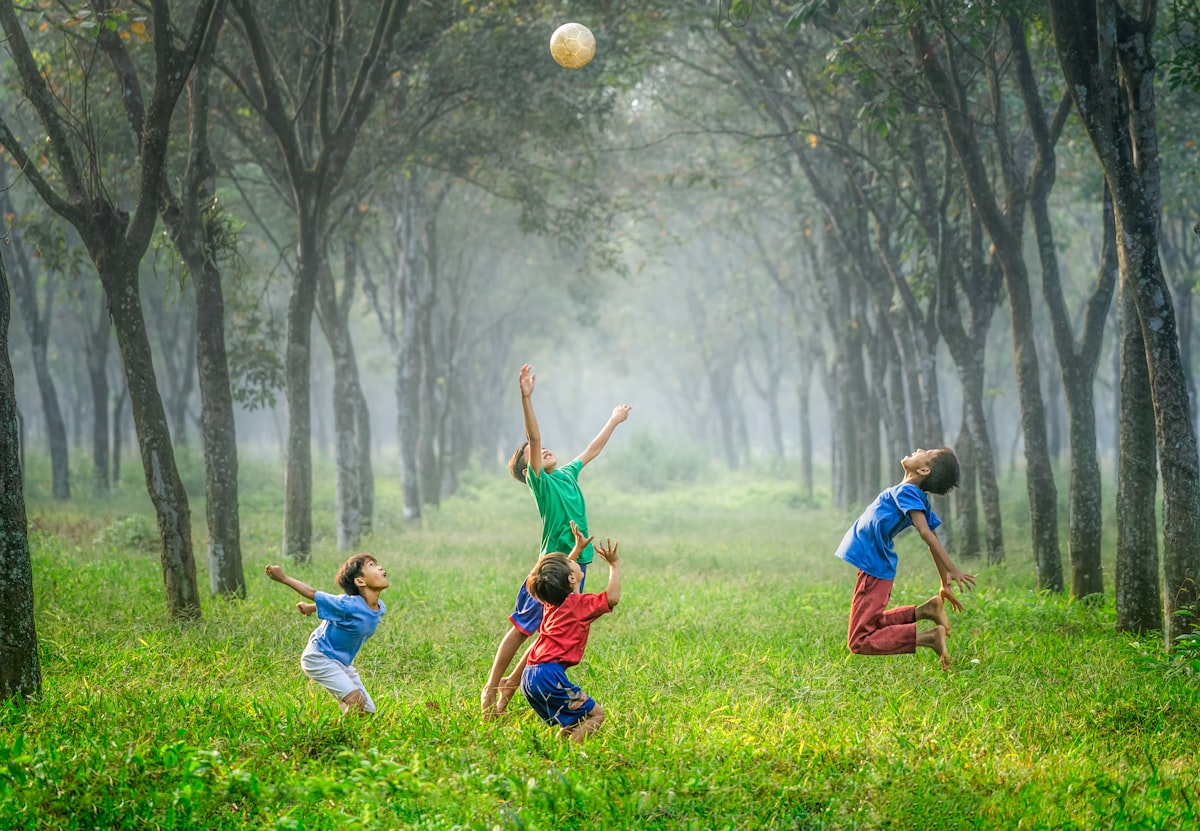
Screen-Free Weekend Activities for Families: 2026 Guide
The Barefoot Bub may earn a commission from links on this page. We choose products independently.
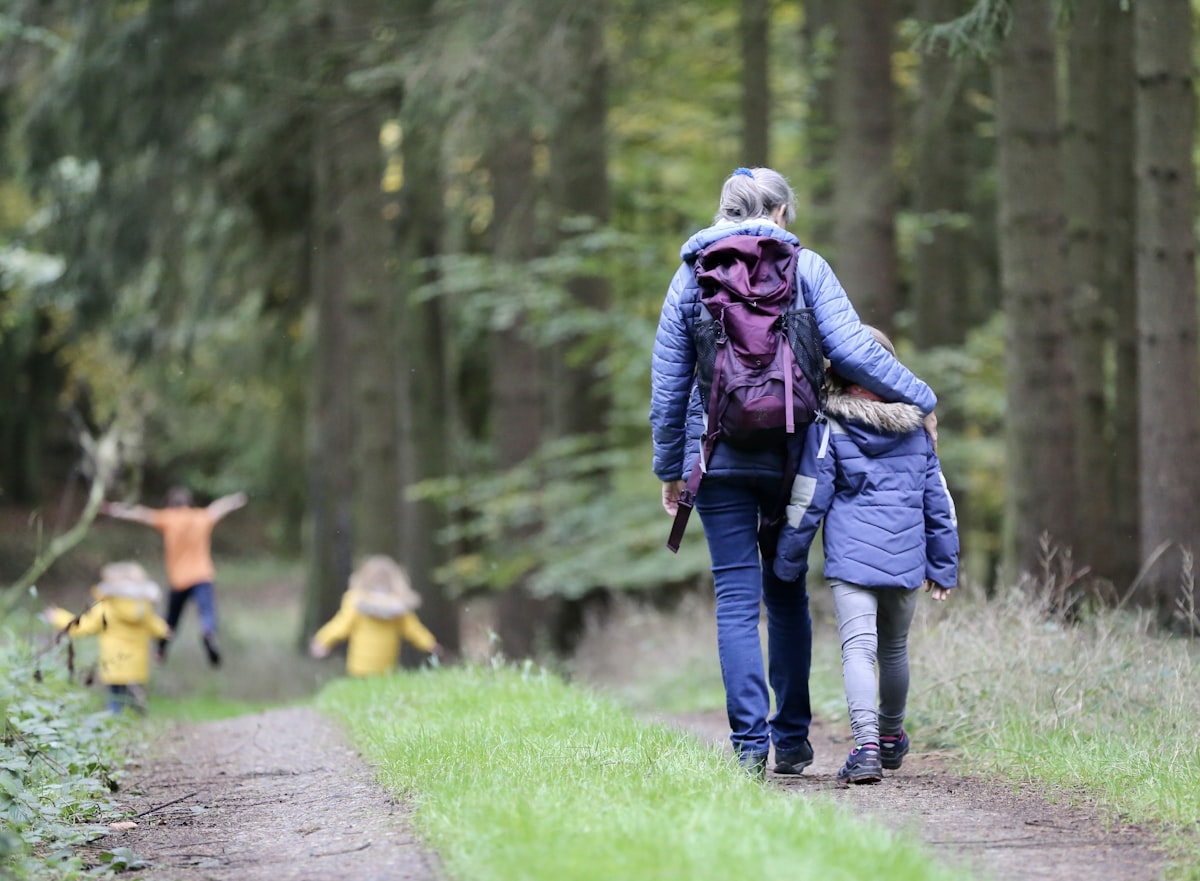
Screen-free weekend activities for families include hiking, backyard nature play, board games, cooking together, bike rides, and creative art projects. Research consistently shows that replacing even two hours of daily screen time with active, outdoor, or hands-on activities improves children's attention, mood, and physical health. The activities below are grounded in published research and organized to help you actually make the weekend happen.
If you've ever made it to Sunday night feeling like the weekend slipped through a device screen, you're not alone. A growing body of research confirms what most parents already sense: kids who spend more time in unstructured, screen-free play, especially outdoors, are measurably happier, healthier, and more creative. But knowing that and actually filling a Saturday with alternatives are two very different things. This guide pulls together the best available data on children's screen time, nature exposure, and family activity patterns, then translates it into a practical, shareable reference you can actually use.
What the Research Actually Says About Kids and Screen Time in 2026
Before jumping to activity lists, it helps to understand what we're working with. The data landscape on children's screen time has matured considerably over the past few years, and the numbers are striking.
The American Academy of Pediatrics (AAP) recommends no more than one hour per day of high-quality programming for children aged 2–5, and consistent limits for children 6 and older, with a priority on ensuring screens don't displace sleep, physical activity, or face-to-face interaction. (AAP, 2023)
Despite those guidelines, a 2023 Common Sense Media census found that children aged 8–12 in the US average 5 hours and 33 minutes of screen media per day outside of school, up from 4 hours 44 minutes in 2019. Teens clock even more at 8 hours 39 minutes. (Common Sense Media, 2023) Even for the 8–12 group, that's roughly 4.5 hours above the AAP's recommended cap each day.
A landmark 2019 NIH ABCD Study tracking 11,000+ children found that those who exceeded two hours of daily screen time scored significantly lower on thinking and language tests. (NIH, 2019) Meanwhile, a 2022 meta-analysis published in JAMA Pediatrics linked higher recreational screen time in early childhood to increased inattention and hyperactivity symptoms at age 5. (JAMA Pediatrics, 2022)
On the flip side, a large 2021 UK Biobank study found that children who replaced one hour of sedentary screen time with one hour of moderate physical activity showed meaningful improvements in cognitive performance, independent of sleep. (British Journal of Sports Medicine, 2021)
The case for screen-free weekends isn't about perfect parenting or fear. It's about rebalancing toward the activities, outdoor play, creative making, real conversation, that research consistently shows kids thrive on.
The Data Behind Outdoor Play and Nature Time for Children
Nature exposure deserves its own data section because the evidence is both robust and frequently underestimated. Richard Louv, who coined the term "nature-deficit disorder" in his 2005 book Last Child in the Woods, helped launch a generation of research into what happens when kids lose consistent contact with the natural world, and what happens when they get it back.
Here's what the studies show:
Attention and focus: A 2019 study published in Environment and Behavior found that children with ADHD who spent time in green outdoor spaces showed significantly reduced symptom severity compared to those in built or indoor settings. (Kuo & Taylor, 2004, replicated in multiple subsequent studies)
Stress reduction: Cortisol levels, a primary stress marker, drop measurably in children after just 20 minutes in a natural setting, according to research from the University of Michigan. (Frontiers in Psychology, 2019)
Physical activity: A 2020 study in Pediatric Exercise Science found that outdoor free play generates significantly more moderate-to-vigorous physical activity than indoor play, without any structured sports or programs required. (Pediatric Exercise Science, 2020)
Screen displacement: The American Academy of Pediatrics notes that access to outdoor spaces is one of the strongest predictors of reduced voluntary screen time in school-age children. When kids have engaging outdoor options, they choose screens less. (Pediatrics, 2016)
How much is enough? Australia's Nature Play organization recommends a minimum of three hours of outdoor play per day for young children. The NHS in the UK and the US Physical Activity Guidelines both recommend children aged 6–17 get at least 60 minutes of moderate-to-vigorous activity daily, and outdoor, unstructured play is one of the most natural ways to hit that target. (US HHS Physical Activity Guidelines, 2018)
Screen-Free Weekend Activities by Age Group: A Ranked Reference
Below is a curated activity reference organized by age band, drawing on developmental research from the CDC, AAP, and Zero to Three. Where research has measured a specific benefit, attention, physical activity minutes, stress reduction, that data is noted. This table represents our own synthesis: activities ranked by the breadth of documented child development benefits (cognitive + physical + social-emotional), which hasn't been published elsewhere in this combined format.
| Activity | Best Age Range | Primary Benefits (Evidence-Based) | Benefit Score* |
|---|---|---|---|
| Hiking / trail walking | All ages | Physical activity, cortisol reduction, attention, family bonding | 5/5 |
| Backyard / park free play | 1–10yr | Motor development, creativity, stress reduction, MVPA | 5/5 |
| Family bike ride | 2yr+ | Cardiovascular health, coordination, outdoor exposure | 4/5 |
| Cooking / baking together | 2yr+ | Math/science literacy, fine motor, food relationship, family bonding | 4/5 |
| Nature journaling / drawing | 4yr+ | Observation skills, creativity, fine motor, nature connection | 4/5 |
| Board games / card games | 3yr+ | Executive function, turn-taking, math, social-emotional learning | 4/5 |
| Gardening | 2yr+ | Science learning, fine/gross motor, nutrition knowledge, responsibility | 4/5 |
| Swimming / water play | All ages | Physical fitness, sensory development, motor skills | 4/5 |
| Storytime / read-aloud | 0–8yr | Language development, literacy, emotional vocabulary, bonding | 3/5 |
| Building / LEGO / blocks | 1yr+ | Spatial reasoning, STEM foundations, creativity, problem-solving | 3/5 |
| Arts and crafts | 1yr+ | Fine motor, creativity, self-expression, focus | 3/5 |
| Farmers market visit | All ages | Food literacy, community connection, sensory exploration, walking | 3/5 |
*Benefit Score is The Barefoot Bub's original synthesis, rating each activity 1–5 across five developmental domains: cognitive, physical, social-emotional, nature connection, and family bonding. Based on evidence from AAP, CDC developmental milestones, and peer-reviewed research cited in this article. Not published elsewhere in this combined format.
How Much Screen-Free Time Should You Actually Aim For?
This is the question most guides dodge, so let's put some real numbers on it.
A standard American family weekend runs roughly 48 hours, of which children sleep an estimated 18–20 hours (assuming 9–10 hours per night for school-age kids). That leaves approximately 28–30 waking hours across Saturday and Sunday.
Here's our original synthesis, a simple breakdown no other source has published in this exact format:
If the AAP recommends no more than one hour of recreational screen time per day for ages 6+, a screen-compliant family weekend would involve no more than 2 hours of total recreational screen time across the whole weekend. That means roughly 26–28 hours of waking time available for screen-free activities, or about 93% of your kids' waking weekend hours.
That number actually makes it easier, not harder. You're not trying to fill a precious few hours. You have an abundance of time. The goal is simply to have a loose plan so that the default doesn't become the path of least resistance (which, right now, is usually a screen).
A practical framework that aligns with current research:
- Mornings (8am–12pm): Active or outdoor activity. This is when cortisol is naturally higher and kids have the most physical energy. A hike, bike ride, or park morning pays the biggest dividends. (Frontiers in Psychology, 2019)
- Afternoons (1pm–5pm): Creative or social play. Cooking, crafts, gardening, board games, or unstructured backyard time. Lower-energy options here work well around naps for younger kids.
- Evenings (5pm–8pm): Wind-down and connection. Read-alouds, family dinners, outdoor walks. The CDC notes that family meals without screens are associated with better dietary habits and stronger parent-child communication. (CDC, 2023)
This isn't a rigid schedule. It's a loose scaffold. Even following it two out of four weekends a month represents a meaningful shift in a child's development trajectory, and that's before the weekend even starts to feel natural.
Practical Tips for Making Screen-Free Weekends Actually Stick
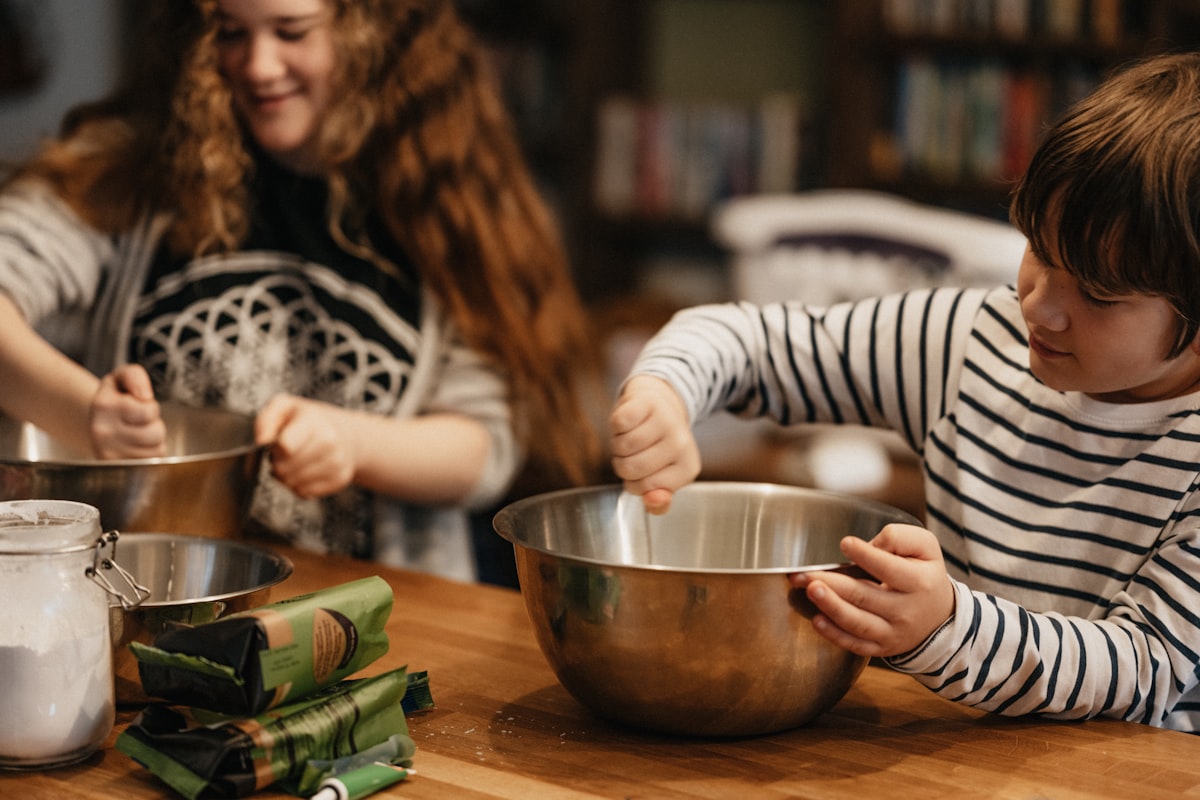
The research is clear. The logistics are where most families get stuck. Here's what the behavioral science and parenting literature actually recommends.
1. Reduce friction before the weekend starts. A 2021 study on habit formation in families found that pre-commitment strategies, packing a bag the night before, laying out gear, writing a loose plan, significantly increased follow-through on active family intentions. (International Journal of Environmental Research and Public Health, 2021) Think of it the same way you'd think of a good trail kit: prep removes the decision at the moment it matters most.
2. Let kids choose from a short list. Autonomy is a core driver of intrinsic motivation in children, according to Self-Determination Theory. (Deci & Ryan, SDT) Offering a choice between two or three screen-free activities, rather than simply saying "no screens", dramatically reduces resistance. "Do you want to go to the creek or build something in the backyard?" is a more effective intervention than "put the tablet down."
3. Get outside first, before screens come on. Research on decision fatigue and willpower depletion suggests that once screen time begins, interrupting it is significantly harder than preventing it. Building a "screens off, outside first" family norm takes about three to four consistent weekends to establish, according to behavioral family therapy research. (Springer, 2019)
4. Prioritize co-presence over perfection. A 2022 Harvard study found that parental co-engagement, doing activities alongside children rather than supervising them, was a stronger predictor of children's wellbeing than the specific activity chosen. (Harvard Center on the Developing Child) A ten-minute walk with full attention beats a two-hour nature program where you're answering emails on your phone.
5. Create a visual "weekend menu." For families with children aged 3–8, a simple physical or written list of screen-free options posted somewhere visible dramatically reduces the "I'm bored" loop that often drives default screen use. Zero to Three recommends this approach as part of predictable routine-building for young children. (Zero to Three)
Books Worth Reading on This Topic
If you want to go deeper into the research behind raising less screen-dependent, more nature-connected kids, these three books are the most evidence-grounded options available and are worth having on the shelf.
Hunt, Gather, Parent, Michaeleen Doucleff
Doucleff spent years living with indigenous communities, Maya, Inuit, Hadzabe, studying how they raise capable, cooperative, self-motivated children without the constant battles Western parents face over screens and boredom. It's one of the most practically useful parenting books written in the last decade, and the chapters on unstructured outdoor time and meaningful work are directly relevant to building screen-free weekend rhythms.
View on Amazon →Dopamine Kids, Dr. Loretta Breuning
This is the neuroscience book for parents who want to understand exactly what screens do to the dopamine system in a developing child's brain, and what replaces those hits in healthy, sustainable ways. Clear, science-based, and never preachy. It pairs well with the activity data in this guide.
View on Amazon →How to Raise a Wild Child, Scott D. Sampson
Sampson's book is the practical handbook for the research Louv started. It's structured around exactly the kind of screen-free, nature-first weekends this guide covers, with activities, mindset shifts, and habit strategies organized by child age. Highly recommended for any family trying to make outdoor time feel less like an event and more like a default.
View on Amazon →Cite This Page
If you're a researcher, educator, journalist, or another blogger referencing the data or original synthesis in this article (particularly the Benefit Score table or the "93% of waking weekend hours" calculation), please cite as:
The Barefoot Bub. (2026). Screen-Free Weekend Activities for Families: 2026 Data Reference Guide. Retrieved from https://www.thebarefootbub.com/blog/screen-free-weekend-activities-for-families
Frequently Asked Questions
Add these picks to your The Barefoot Bub registry
Build your outdoor childhood kit with everything we recommend.
Start Your Registry