Keeping Kids Busy Without Screens: 2026 Stats & Ideas
Keeping kids busy without screens means substituting passive digital consumption with active, open-ended experiences — outdoor play, creative projects, sensory exploration, and real-world social interaction. Research consistently shows that unstructured, screen-free time supports stronger executive function, physical health, and emotional regulation in children of all ages. The strategies below are grounded in peer-reviewed data and practical for everyday family life.
If you've ever put your phone down mid-scroll and wondered how the afternoon evaporated, you already understand the pull of screens — for kids and adults alike. The question most parents are really asking isn't "how do I ban screens forever?" It's something more honest: how do I make the alternatives feel easy enough to actually happen? This guide pulls together the best available research on screen time and child development, translates it into actionable ideas, and gives you a reference you can actually use — whether you're planning a rainy Saturday or rethinking your family's whole rhythm.
What the Research Actually Says About Screen Time and Kids
Before reaching for an activity list, it helps to understand what we're working with. The data on children's screen use in 2026 is striking — and clarifying.
- 4.5 hours per day — the average daily recreational screen time for US children aged 8–12, according to Common Sense Media's census.
- 57% of parents say they struggle to enforce screen-time limits "often" or "sometimes," per the Pew Research Center.
- Less than 1 in 4 US children aged 6–17 meet the recommended 60 minutes of daily moderate-to-vigorous physical activity, reports the CDC.
- Children who meet physical activity guidelines show 40% lower odds of high-risk depressive symptoms, per a 2022 JAMA Pediatrics study.
- The American Academy of Pediatrics recommends no screen time for children under 18–24 months (except video chatting), and no more than 1 hour of high-quality programming for ages 2–5. (AAP, 2024)
- A large-scale study of 4,500+ children found that exceeding 2 hours of recreational screen time was associated with significantly lower scores on memory and language tests. (The Lancet Child & Adolescent Health, 2019)
- Nature exposure of as little as 10 minutes has been shown to reduce cortisol levels and improve focus in children. (Frontiers in Psychology, 2019)
- Unstructured outdoor play correlates with improved executive function, including working memory and cognitive flexibility, compared to structured indoor activities. (Journal of Environmental Psychology, 2019)
Our synthesis: If the average US child aged 8–12 is logging 4.5 hours of recreational screen time daily, and the AAP recommends no more than 1–2 hours for school-age children, the average family is running a 2.5–3.5 hour daily deficit in screen-free time. Across a week, that's 17–24 hours of reclaimed time available for alternative activities — roughly equivalent to a part-time job's worth of childhood. That reframe changes the question from "what do I do in a pinch?" to "how do I build a rhythm that fills this space sustainably?"
A Ranked Summary: Screen-Free Activities by Evidence Strength
Not all screen-free activities are equal — and the research reflects that. Below is our original ranking of activity categories by the breadth and quality of evidence supporting their developmental benefits. This synthesis has not been published elsewhere.
| Activity Category | Key Benefit (Research-Backed) | Minimum Effective Dose | Evidence Tier |
|---|---|---|---|
| Unstructured outdoor play | Executive function, stress regulation, creativity | 30–60 min/day | Tier 1 — multiple RCTs + longitudinal |
| Physical activity / active play | Mental health, sleep, academic performance | 60 min/day (CDC) | Tier 1 — CDC, WHO, AAP consensus |
| Reading (child-led) | Vocabulary, empathy, reading fluency | 20 min/day | Tier 1 — strong correlational + experimental |
| Creative / open-ended play (indoors) | Problem solving, language, self-regulation | Any duration, child-directed | Tier 2 — strong observational evidence |
| Nature exposure (passive: walks, parks) | Cortisol reduction, attention restoration | 10 min/day | Tier 2 — growing RCT base |
| Sensory / hands-on crafts | Fine motor, focus, emotional expression | Variable | Tier 2 — occupational therapy literature |
| Social play / cooperative games | Emotional intelligence, conflict resolution | Variable | Tier 2 — developmental psychology |
| Chores / real-world tasks | Responsibility, competence, intrinsic motivation | Age-appropriate daily tasks | Tier 3 — strong parenting literature |
Tier 1 = supported by randomized controlled trials or major public health consensus. Tier 2 = strong observational or experimental evidence without full RCT consensus. Tier 3 = well-supported in parenting and developmental literature. This ranking was compiled by The Barefoot Bub team and has not been published elsewhere.
Outdoor Play: The Highest-Return Screen-Free Investment
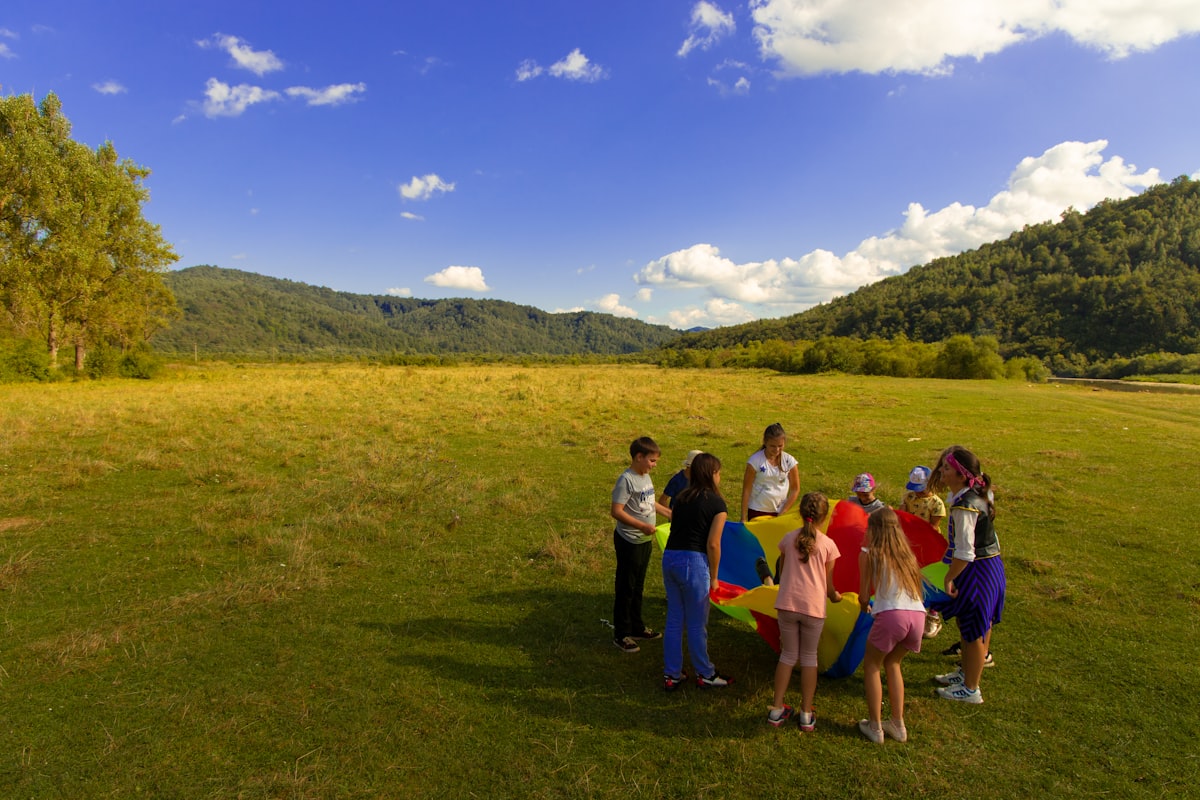
If you could only do one thing to keep kids busy without screens — and have the research behind you — it would be getting them outside with as little structure as possible. This isn't about organized sports or nature curricula. It's about a backyard, a trail, a patch of grass, and time.
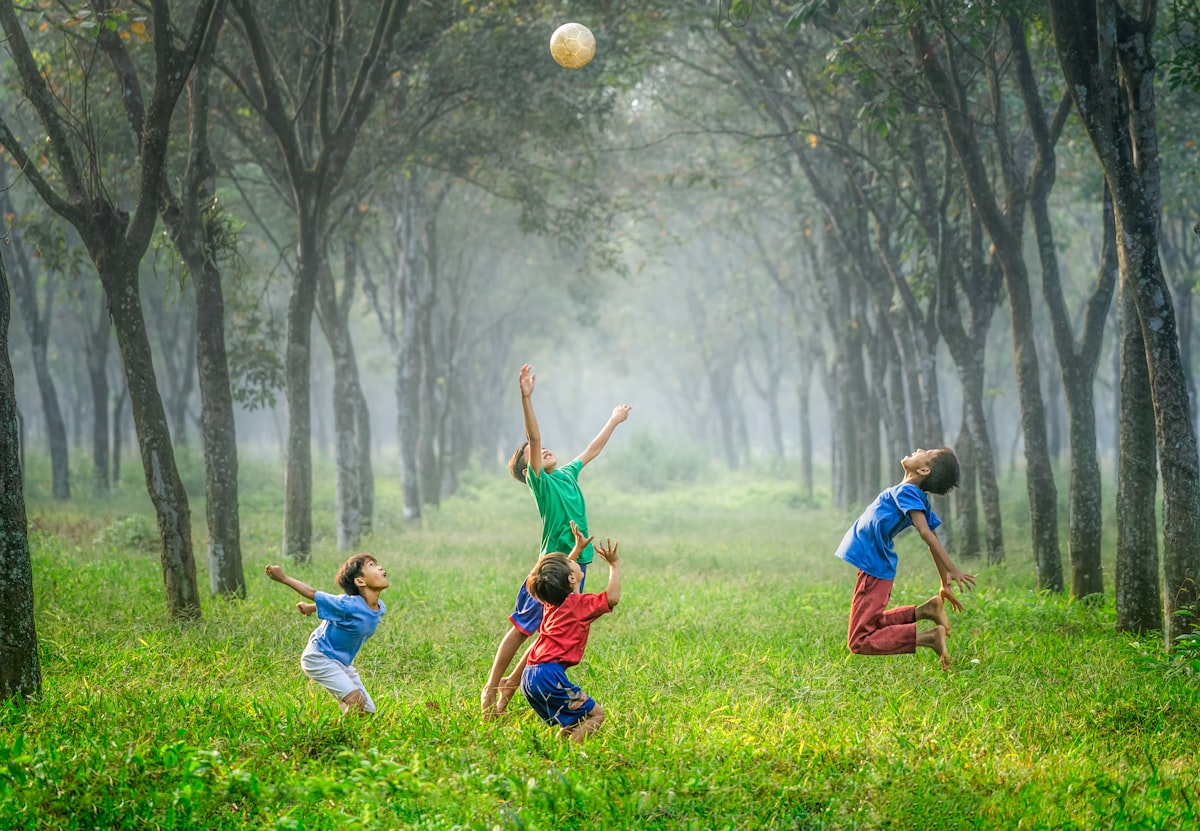
The evidence is clear: children who spend more time in unstructured outdoor play demonstrate stronger working memory, better impulse control, and greater creative flexibility than those in primarily structured or indoor environments. (Journal of Environmental Psychology, 2019) These benefits appear across age groups and don't require wilderness — a neighborhood park counts.
Richard Louv, author of Last Child in the Woods, coined the term "nature-deficit disorder" to describe what happens when children are systematically separated from the natural world. (Louv, 2005) His framework helped launch a generation of research confirming what parents already sensed intuitively.
Practically speaking, the barrier to outdoor time is rarely desire — it's friction. Weather, logistics, and the feeling that getting outside requires preparation. The families who consistently succeed at screen-free outdoor time tend to have two things dialed in: gear that removes the friction of going, and a low bar for what counts as "an adventure." A 20-minute walk before dinner is an adventure. Stomping through puddles after rain is an adventure. You don't need a trailhead.
Key stat to remember: children in the US spend an average of only 4–7 minutes per day in unstructured outdoor play, compared to over 7 hours in front of screens. (Children & Nature Network) The gap is staggering — and entirely closable.
Screen-Free by Age: What Actually Works at Each Stage

"Screen-free activities" means something completely different for a 10-month-old than for a 7-year-old. Lumping them together is where most advice goes wrong. Here's a practical breakdown by developmental stage — with the honest acknowledgment that overlap and flexibility are the point.
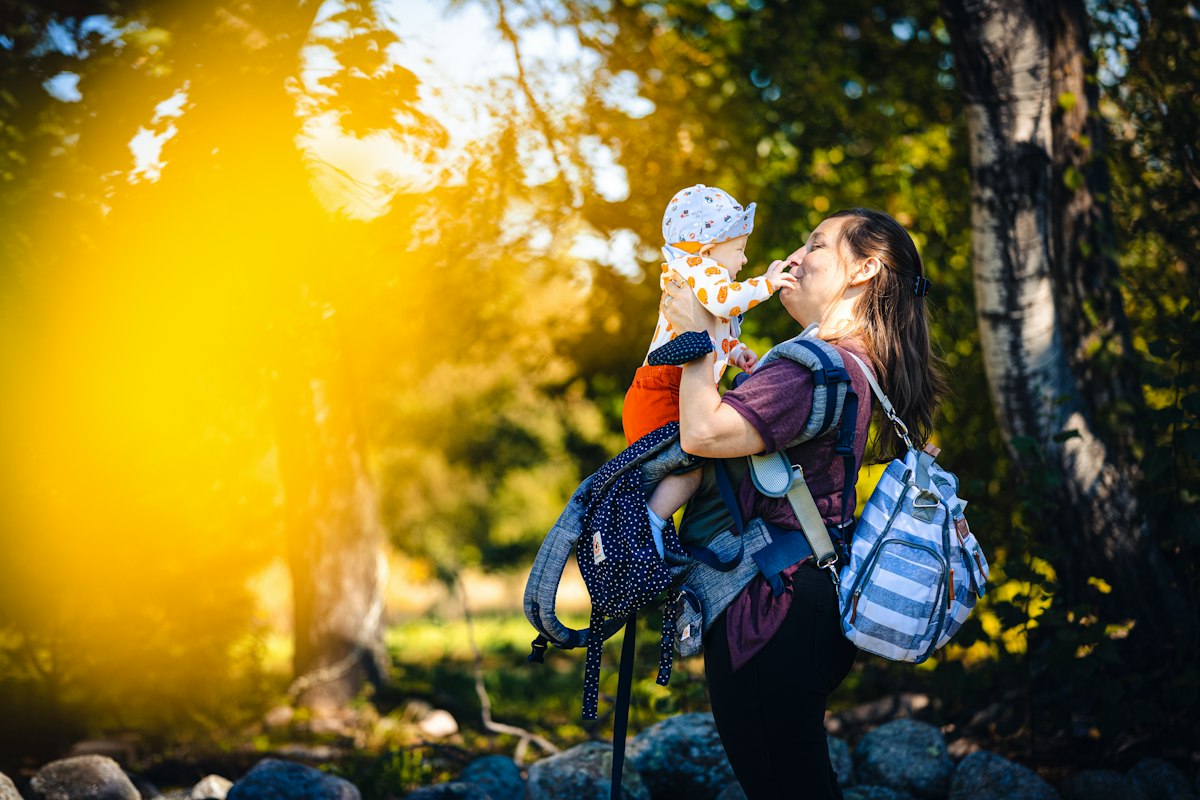
0–12 months: Sensory experience is everything. Grass under bare feet, wind on skin, the sound of leaves. Research from the Harvard Center on the Developing Child shows that "serve and return" interactions — responsive back-and-forth between caregiver and infant — are the single most important driver of early brain development. No screen replicates this. Babywearing outdoors, tummy time on a blanket in the yard, and narrating your walk are high-value, zero-cost activities at this age.
1–3 years: Toddlers thrive on repetition, parallel play, and sensory exploration. Water play, digging, painting with mud, collecting rocks — these aren't just activities, they're developmental work. A Zero to Three review found that children under 3 learn virtually nothing transferable from screens compared to the same content presented by a live person. The case for screen-free time is strongest at this stage.
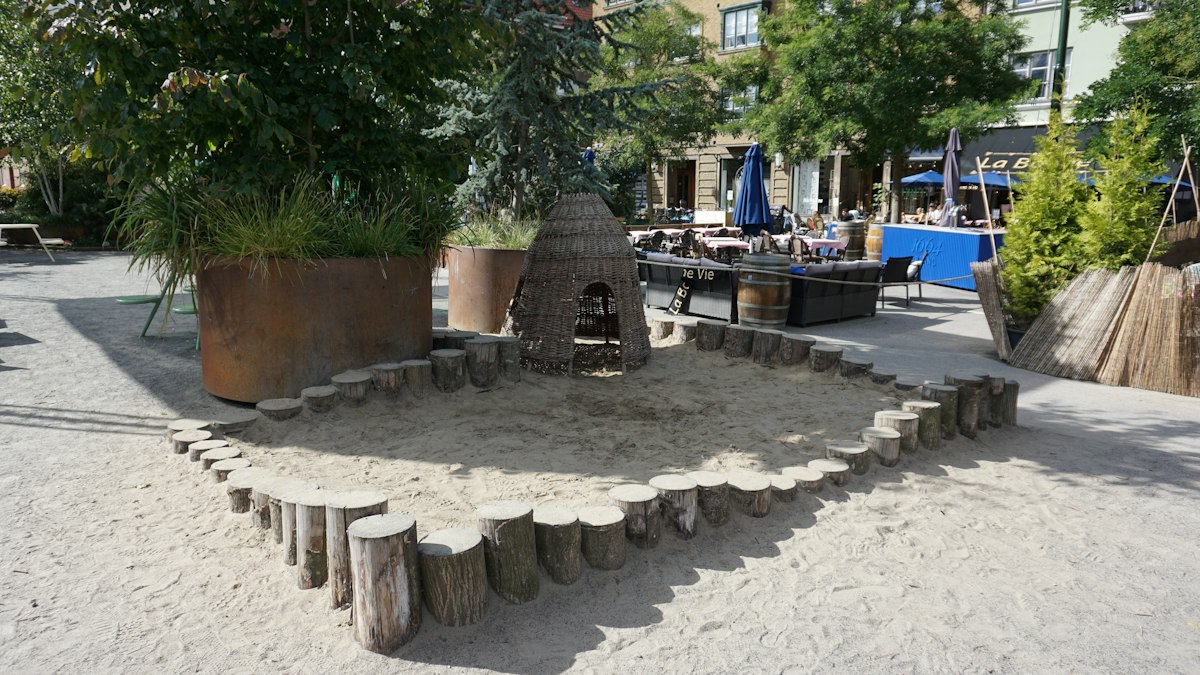
3–6 years: Imaginative play peaks here. Give kids a cardboard box, a pile of sticks, or a sandbox and they'll build entire worlds. Pretend play at this age is directly correlated with theory of mind development — the ability to understand that other people have their own thoughts and perspectives. (International Journal of Behavioral Development, 2015) This is the age to lean hardest into open-ended, unscripted play.
6–8 years: Kids at this stage can handle more sustained, rule-based activities — board games, building projects, hiking with a real purpose, gardening, cooking. They also begin to internalize reasons for choices, so involving them in the "why" of screen-free time builds buy-in rather than resistance. Children who understand the reason behind a rule are significantly more likely to follow it willingly. (APA, Developmental Psychology)
Making Screen-Free Time Stick: The Systems That Work
The families who are most consistently screen-free aren't the ones with the strictest rules — they're the ones who've built environments where screens aren't the default. That's a subtle but important shift. Here's what the behavioral research and parenting literature say actually works:
1. Transition rituals: Children struggle with abrupt transitions more than adults do. A consistent "screen off" cue — a timer, a song, a visual countdown — reduces conflict dramatically. The predictability matters more than the method. (Zero to Three)
2. Activity bins (not lists): A bin of specific, tactile materials — watercolors, playdough, building blocks, magnifying glasses — is more effective than a list of ideas. Children, especially under age 6, respond to physical cues. Seeing the materials lowers the activation energy to start.
3. Boredom as a feature: A creativity research meta-analysis found that periods of boredom reliably precede creative problem-solving in children. The instinct to immediately fill boredom is understandable, but resisting it — even for 10–15 minutes — pays dividends. Boredom is not a problem to solve; it's a launchpad.
4. Parent co-regulation: Studies consistently show that parental screen use is the strongest predictor of child screen use. (JAMA Pediatrics, 2019) This is uncomfortable data, but also actionable. When a parent puts their phone down and picks up a book, goes for a walk, or starts a project, children follow — often within minutes.
5. Screen-free zones, not just screen-free times: The AAP recommends designating specific rooms (bedrooms, dining tables) as screen-free spaces. Physical environment design is one of the most reliable behavior-change tools available — it removes the moment-to-moment decision from the equation entirely. (AAP)
📌 Cite this page: The Barefoot Bub. "Keeping Kids Busy Without Screens: 2026 Stats & Ideas." TheBarefootBub.com, September 2026. thebarefootbub.com/blog/keeping-kids-busy-without-screens
Frequently Asked Questions
Add these picks to your The Barefoot Bub registry
Build your outdoor childhood kit with everything we recommend.
Start Your Registry