Mud Kitchen Ideas for Toddlers: DIY vs. Store-Bought
The Barefoot Bub may earn a commission from links on this page. We choose products independently.
For toddlers, a DIY mud kitchen built from repurposed pallets or crates wins on customization and cost, while a store-bought mud kitchen wins on setup speed and durability. If you have an afternoon to spare and love a weekend project, go DIY. If you want something ready before naptime ends, buy one. Neither choice is wrong — both give toddlers the same incredible open-ended, sensory-rich outdoor play.
Mud kitchens are having a moment, and honestly, they deserve it. Watching a two-year-old stir a bowl of muddy water with the same intensity a chef brings to a roux is one of those parenting moments that makes you feel like you're doing everything right. The science backs it up too — unstructured messy play outdoors supports sensory development, creativity, and emotional regulation in ways that tidy indoor activities simply can't replicate. But when you start researching mud kitchen ideas for toddlers, you hit a fork in the road pretty fast: build your own or buy one? This comparison breaks it down dimension by dimension so you can make the call that actually fits your life.
Verdict at a Glance
Before we dig into the details: DIY wins if you want flexibility, a lower price tag, and something that grows with your yard. Store-bought wins if you're short on time, tools, or the energy to source materials. Keep reading — there's a right answer for most families, and it's probably clearer than you think.
Setup and Build Time
This is where store-bought earns its price premium immediately. Most ready-made mud kitchens arrive flat-packed and assemble in 30–60 minutes with basic hardware. You'll spend about the same time you'd spend on any IKEA bookshelf. For parents with busy schedules (hi, that's most of us), that matters enormously. You order it, it arrives, the toddler plays in it by the weekend.
DIY mud kitchens are genuinely fun to build, but be honest with yourself about what that involves. A basic pallet kitchen with a mixing bowl "sink" and a shelf can take a full Saturday. A more elaborate version with a hose hook-up, painted details, and proper weather sealing can stretch across two weekends. You'll also need tools — a drill, saw, sandpaper, and wood screws at minimum — plus time hunting down pallets, crates, or salvaged timber that's actually safe and splinter-free for small hands.
That said, the DIY process can be its own reward. Many families make the build a family project: older kids sand boards, parents drill, and toddlers "supervise" from a safe distance. If that sounds like your kind of Saturday, it's genuinely a beautiful way to spend it.
Edge: Store-bought
Cost Comparison
DIY almost always wins on cost — with a few caveats. If you can source free pallets (check Facebook Marketplace, local hardware stores, or garden centers), your material costs might be as low as $20–40 for screws, sandpaper, and weatherproof paint. Even a more polished DIY build with purchased lumber usually comes in under $80.
Quality store-bought mud kitchens range from around $80 for simpler wooden sets to $200+ for multi-feature stations with sinks, stoves, and chalkboard panels. Budget options exist, but many parents find that cheaper models have thinner wood that warps after a season outdoors.
One honest cost note for DIY: if you don't already own tools, buying or borrowing them changes the math. And if your time is genuinely scarce, the "free" labor of a full weekend build has real value too.
Edge: DIY
Customization and Play Value
This is where DIY absolutely shines. You can design your mud kitchen around your specific space, your toddler's height, and exactly the features that spark play in your yard. Add a PVC pipe "faucet," a chalkboard menu board, little hooks for hanging tools, a rain barrel for water collection — the possibilities are genuinely endless. You can expand it seasonally, repaint it, or add a herb garden shelf as your child grows.
Store-bought kitchens are well-designed but fixed. What you buy is what you get, and while many have thoughtful features (sinks with drain holes, spice racks, ovens with doors), you can't restructure the layout if it doesn't quite fit your patio.
That said, the right store-bought kitchen is still incredibly play-rich. Toddlers don't need elaborate setups — they need a surface, a container for water, and something to stir. Even a simple ready-made station delivers all of that beautifully.
Edge: DIY
Safety and Durability
Both options require attention here, but in different ways. With store-bought, the manufacturer has handled sanding, structural integrity, and (in reputable brands) used child-safe finishes. Look for kitchens made from FSC-certified wood and finished with non-toxic, water-based sealants. Always check for splinters on delivery and after each winter.
With DIY, safety is entirely on you. Pallet wood is the most common DIY material, but it requires careful sourcing — only use pallets stamped "HT" (heat treated), never "MB" (methyl bromide treated). Sand every surface thoroughly, round all corners, and seal with a child-safe exterior finish. Check for protruding nails or screws before every play session, especially after weather changes. This isn't scary, but it is a genuine ongoing responsibility.
Durability-wise, a well-built DIY kitchen with good wood and proper weatherproofing can last many years. Many store-bought options at the mid-price range hold up well too, though thinner boards on budget models can warp or crack after two or three seasons in the elements.
Edge: Store-bought (for safety ease) / DIY (for long-term durability, if well built)
The Best Tools to Complete Either Setup
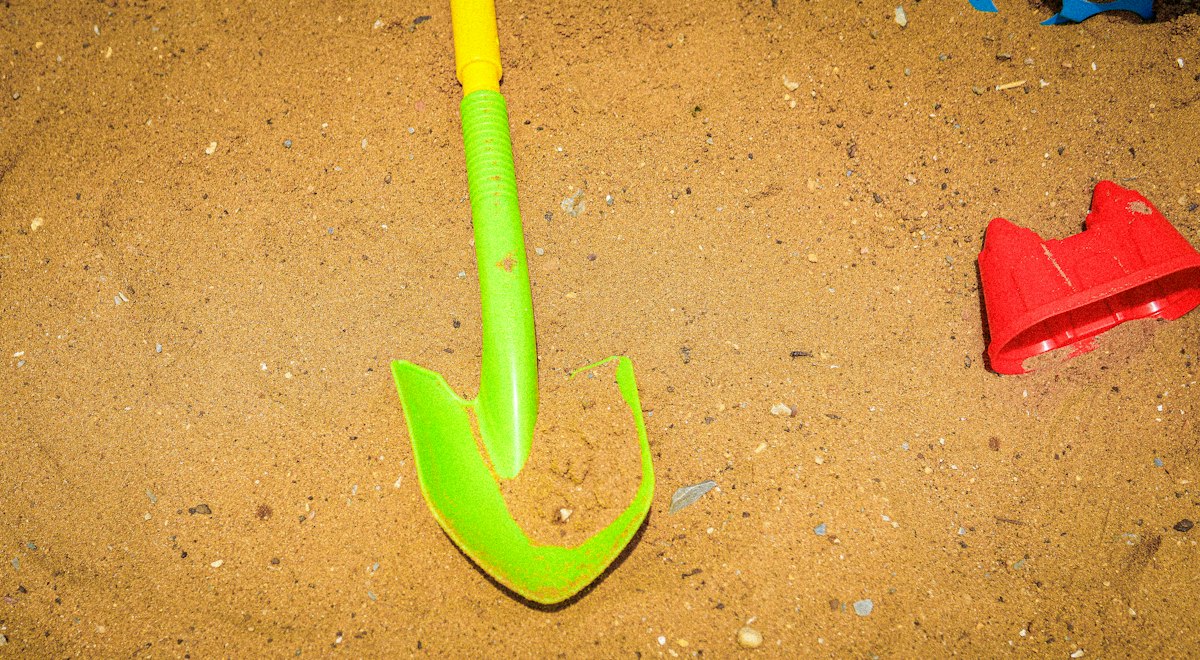
Regardless of which route you go, the magic really happens when toddlers have quality tools to play with. Flimsy plastic sets break fast and frustrate little hands. Look for sets with real weight, smooth finishes, and shapes that actually scoop and pour effectively. The Quut and Scoppi ranges are genuinely impressive here — designed with toddler ergonomics in mind and built to outlast many seasons of muddy play.
Scoppi Shovel Toy – Ergonomic Kids Beach Shovel
This isn't just a beach toy — the ergonomic handle and angled blade make it one of the best digging tools for a mud kitchen. Toddlers can actually scoop and transfer without the frustration of a tool that keeps slipping. Durable, beautifully designed, and easy to clean.
View on Amazon →Quut Beach Set – Bucki, Raki & Magic Sand Shaper for Kids
The Quut set brings the same clever, sensory-rich design to mud play as it does to sand. The bucket, rake, and shaper work brilliantly in a mud kitchen — perfect for filling, mixing, and creating mud pies with real intention. These are the kind of tools that make toddlers look like they know exactly what they're doing (and honestly, they do).
View on Amazon →Who Should Go DIY
You're a DIY mud kitchen family if: you enjoy weekend building projects, you have basic tools already, you want something truly customized to your outdoor space, or you're working with a tighter budget and have the time to invest. It's also a great option if your toddler is already into "helping" — a simple version can be built in an afternoon with their enthusiastic (if chaotic) assistance.
Who Should Buy Store-Bought
Store-bought is the smarter call if: you rent your home and need something portable and removable, you have limited outdoor space that needs a compact fit, you want to get playing this weekend without a project, or you simply don't have the tools or bandwidth for a build right now. There's zero shame in this — a good ready-made mud kitchen is a genuinely excellent product.
Honest Drawbacks of Each
DIY drawbacks: Takes real time and energy. Pallet sourcing can be frustrating. Safety checks are ongoing. If you're not confident with wood and tools, the result might not hold up as well as hoped. It can also be harder to get right at the right height for your specific toddler without planning ahead.
Store-bought drawbacks: You pay a premium for convenience. Budget options can disappoint on durability. You can't easily resize or modify the design as your child grows. Some cheaper models use thin MDF rather than solid wood, which doesn't last outdoors.
Frequently Asked Questions
Add these picks to your The Barefoot Bub registry
Build your outdoor childhood kit with everything we recommend.
Start Your Registry