How to Reduce Screen Time for Children: A Practical Guide
The Barefoot Bub may earn a commission from links on this page. We choose products independently.

The most effective way to reduce screen time for children is to replace it with something compelling, not just remove it. Research from the American Academy of Pediatrics consistently shows that children who have rich alternatives to screens, particularly active outdoor play, naturally gravitate away from devices. Start with small, consistent swaps and build a rhythm your family actually enjoys.
If you've found yourself handing over a phone to buy ten minutes of peace, you're not alone, and you're definitely not failing. Screen time has become the path of least resistance for most families, and honestly, it makes sense. But most parents who want to reduce it aren't looking for a lecture. They're looking for something that actually works in real life, with real kids, on real tired days. The good news: it doesn't have to be an all-or-nothing overhaul. Small, intentional shifts tend to stick far better than cold turkey.
What the Research Actually Says About Screen Time and Kids
Before diving into strategies, it helps to understand what we're working with. The American Academy of Pediatrics (AAP) recommends avoiding screens (except video chatting) for children under 18 months, limiting to one hour per day of high-quality programming for ages 2–5, and placing consistent limits for older kids with an emphasis on balance over hard numbers.
What research shows repeatedly is that it's not just quantity, it's displacement. When screens crowd out physical play, sleep, face-to-face interaction, and time outdoors, that's when we start to see the effects on attention, mood, and development. A landmark AAP policy statement puts it clearly: it's about what children are not doing while on screens that matters most.
The framing shift that helps most families? Stop thinking about cutting screens and start thinking about crowding them out. When kids have genuinely engaging alternatives, especially ones that involve movement, nature, and connection with you, the pull of a screen weakens on its own. That's not wishful thinking; it's backed by how dopamine and reward systems develop in the young brain. (For a deeper dive into the neuroscience, Dopamine Kids by Dr. Alok Patel is worth a read, it's in our catalog.)
Dopamine Kids: A Science-Based Plan to Rewire Your Child's Brain
If you want to understand why screens are so hard to compete with, and what actually works to shift your child's reward system toward real-world play, this book makes the science genuinely readable. It's the kind of thing you'll finish in a weekend and feel less helpless after.
View on Amazon →Why Outdoor Time Is One of the Best Screen Time Replacements

Nature play isn't just a wholesome alternative, it's a neurologically powerful one. Unstructured time outside gives kids the sensory input, physical challenge, and open-ended discovery that screens simply can't replicate. Research published in Scientific Reports found that even short periods of time in green spaces reduced stress and improved attention in children. And anyone who's watched a toddler spend forty-five minutes fixated on a puddle knows that nature has a remarkable ability to hold a kid's focus without a single notification.
The practical challenge isn't convincing kids to love being outside, most of them already do. It's the logistics that get in the way for parents. Gear that's too fiddly to set up, weather that feels like a barrier, the mental load of packing and preparing. That friction is real, and reducing it is genuinely one of the most effective things you can do. A stroller you can grab without thinking, a carrier that's always hanging by the door, raincoats that live in the car, these aren't luxuries. They're the things that turn "we should go outside" into "we're already outside."
Start with a daily non-negotiable outdoor window. Even 20–30 minutes in the morning before the day unravels can change the whole rhythm. Kids who've had fresh air and movement first are genuinely easier to parent for the rest of the day, and less likely to need screens to self-regulate.
Practical Strategies That Actually Work at Home
Reducing screen time is easier when you're adding structure, not just removing access. Here's what tends to work for families:
Create "screen-free zones" by location, not just time. Meals, bedrooms, and car trips under 20 minutes are the easiest places to start. You're not banning screens, you're just keeping them out of certain spaces. The car rule in particular is underrated; short drives become some of the best conversation time you'll get with your kids.
Give screens a clear "on" time rather than limiting "off" time. Instead of "no more screens after dinner," try "screens are on from 4–5pm." Kids handle predictability much better than sudden cutoffs, and when the boundary is clear in both directions, there's far less negotiating.
Keep the alternatives visible and accessible. A basket of art supplies on the kitchen table. Bikes by the door. A jar of outdoor activity prompts. Kids default to screens partly because they're always right there and everything else requires effort to locate. Lower the activation energy for the things you want them to do.
Model it without making it a big announcement. Put your own phone away during outdoor time. Don't narrate it, just do it. Kids notice everything, and this one matters more than most parents expect.
Use the AAP Family Media Plan tool to create a personalized plan that fits your family's schedule, values, and kids' ages. It's free, takes about ten minutes, and gives you something concrete to work from rather than vague guilt.
Age-by-Age Tips for Reducing Screen Time

What works for a two-year-old won't land the same way with a six-year-old. Here's a quick breakdown by age:
0–2 years: The focus here is less about reducing and more about not starting the habit. Prioritize carrier walks, stroller adventures, and backyard time. Video chatting with family is totally fine and doesn't carry the same concerns as passive consumption.
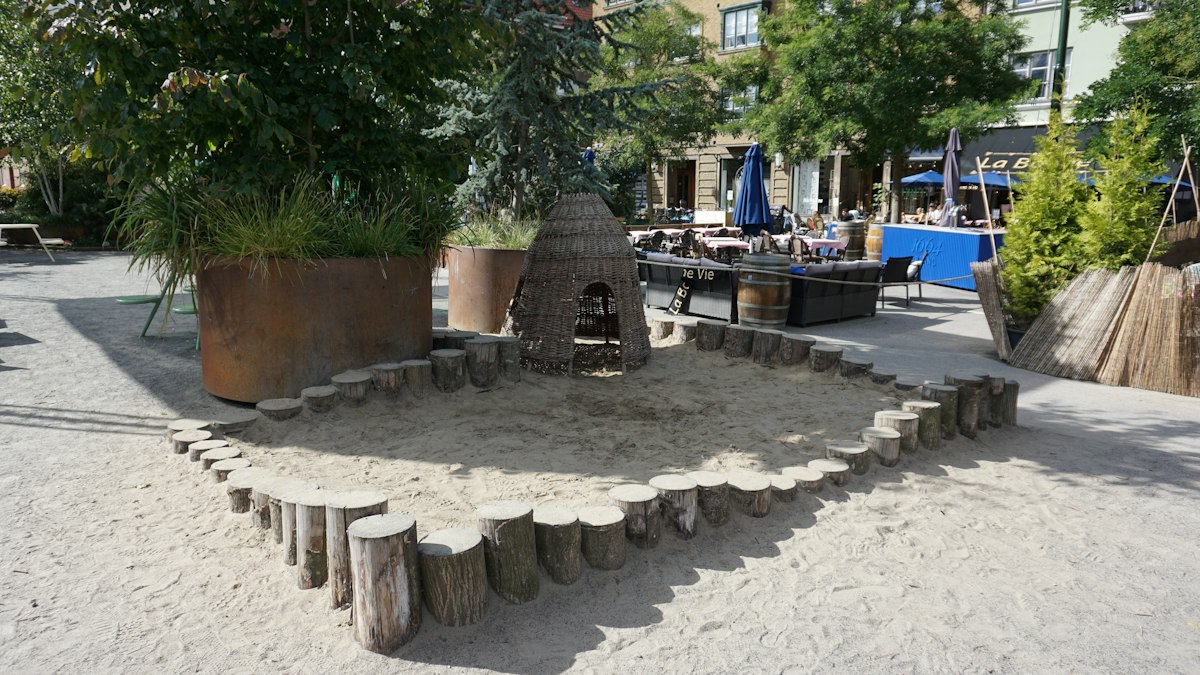
2–4 years: Toddlers can handle "screens after outside time" as a consistent rule, they actually do well with routines that have clear cause-and-effect logic. Sensory play, water play, and sandbox time are especially effective alternatives at this age. Nature walks where they can touch things, collect sticks, and move freely are gold.
4–6 years: Kids this age can start to participate in setting their own screen time boundaries with your guidance. Involve them in choosing what they'll do instead, this shifts them from feeling controlled to feeling empowered. Creative outdoor projects (building a fort, planting something, setting up an obstacle course) keep them engaged for longer than anything screen-based.
6–8 years: School-age kids are navigating peer norms around screens, which makes this trickier. Focus on quality over quantity, watching something together and talking about it is categorically different from passive solo scrolling. Make sure outdoor time has an element of challenge or adventure; low-stakes play can feel boring to kids who've been stimulated by fast-paced content.
Frequently Asked Questions
Add these picks to your The Barefoot Bub registry
Build your outdoor childhood kit with everything we recommend.
Start Your Registry