How to Get Kids to Play Outside More (Really)
The Barefoot Bub may earn a commission from links on this page. We choose products independently.
The most effective way to get kids to play outside more is to reduce friction, not increase pressure. Make going outside feel easy, natural, and fun by setting up simple routines, keeping gear ready to grab, and letting kids lead the play once you're out there. Consistency beats perfection every time.
If you've ever said "go play outside" and been met with a blank stare or a dramatic groan, you're in very good company. Getting kids unplugged and out the door can feel like negotiating a small treaty. But here's the thing: kids aren't wired to resist nature. They're wired to resist inconvenience. When getting outside feels easy, when the boots are by the door, the snacks are already packed, and there's no big agenda, most kids will happily go. The secret isn't motivation. It's removing every tiny obstacle between your couch and the front door.
Start With You, Not Them
This one might sting a little, but it's worth saying: kids go where parents go. If outdoor time feels like a logistical event that requires thirty minutes of prep and a mental checklist, it's going to stay at the bottom of the priority list for everyone. The first shift to make is your own. Start thinking of outside not as a destination but as a default. Before the afternoon screen time battle begins, ask yourself: what's the smallest, easiest version of outside right now? A ten-minute walk around the block counts. Eating lunch on the back porch counts. Checking on the garden together counts. You don't need a trail or a plan. You just need a door.
Research from the American Academy of Pediatrics consistently reinforces that unstructured outdoor play supports physical development, emotional regulation, and creativity in kids. You probably already knew that. What helps is making it feel doable on a random Tuesday at 4pm, not just on a curated weekend hike.
Once you shift your own default, your kids will follow. They're watching everything you do, and if they see you reaching for your shoes instead of the remote, that becomes the family rhythm.
Lower the Bar Dramatically
We talk ourselves out of outdoor time by holding it to an impossibly high standard. The hike has to be long enough, the beach day has to be perfect weather, the backyard play has to be organized. Let go of all of that. The goal isn't an Instagram-worthy adventure. The goal is frequency. Ten minutes outside every day beats one perfect Saturday hike a month.
Give kids a reason to be out there that feels genuinely open-ended. A stick. A puddle. A patch of dirt. Unstructured outdoor play, the kind where kids make the rules, is where the real developmental magic happens. Scott Sampson, in How to Raise a Wild Child, makes a compelling case for this: nature connection isn't built through structured programs. It's built through small, repeated, unscheduled moments outdoors.
How to Raise a Wild Child by Scott D. Sampson
If you want to go deeper on the philosophy behind nature-connected parenting, this is the book. It's practical, warm, and full of small ideas you can actually use. A great read for any parent who wants outside time to feel natural rather than forced.
View on Amazon →Lower the bar. Then lower it again. And watch what happens when kids have space to just… be outside.
Make the Gear Work For You
Nothing kills outdoor momentum faster than realizing the rain jacket is in the back of the closet and the good shoes need to be found. Gear isn't about having more stuff. It's about removing the reasons you don't go. When everything is ready and waiting by the door, the decision to head outside takes about five seconds instead of fifteen minutes.
This looks different at every age. For toddlers and preschoolers, it might mean waterproof layers that are easy to pull on, so a gray drizzly afternoon isn't an automatic veto. For families with babies, it might mean a stroller setup that can handle any surface without a second thought, so "it's kind of cold" or "the path is bumpy" stop being excuses.
Bergen 2.0 PU Rain Set – Toddlers'/Kids'
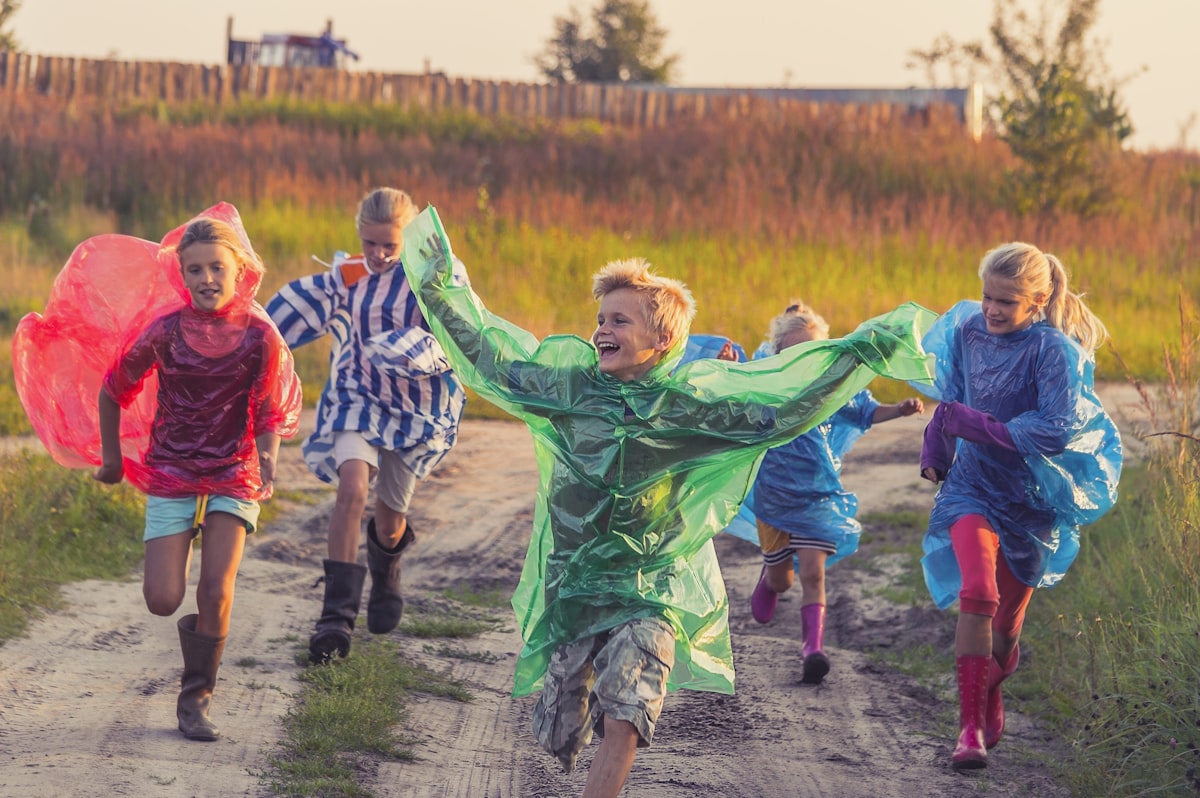
There's a Scandinavian saying that there's no such thing as bad weather, only bad clothing. This rain set lives up to that philosophy. Fully waterproof, easy to pull on over regular clothes, and durable enough to survive the kind of puddle abuse toddlers specialize in. When rain gear is this easy to use, rainy days become a highlight instead of a reason to stay in.
View on Amazon →Thule Urban Glide 3
For families with babies and toddlers, a stroller that handles any terrain without drama is a genuine game-changer. The Thule Urban Glide 3 is smooth on gravel paths, park trails, and city sidewalks alike. When the stroller is easy and reliable, "let's go for a walk" actually happens, even on weekday afternoons when you're tired and the couch is calling.
View on Amazon →Lean Into All-Weather Thinking
One of the fastest ways to double your family's outdoor time is to stop waiting for perfect weather. This isn't about being hardcore, it's about expanding what feels possible. A light rain with the right gear is genuinely fun for most kids. Cold mornings are more exciting with something warm to sip along the way. Overcast days are often the best for longer walks because there's no sun glare and fewer crowds.
Linda Åkeson McGurk, author of There's No Such Thing as Bad Weather, spent years documenting how Scandinavian families approach outdoor time: with the assumption that they're going, not the question of whether they should. That mental shift, from "is today good enough?" to "how do we dress for today?", is surprisingly powerful.
There's No Such Thing as Bad Weather by Linda Åkeson McGurk
This book will change the way you look at a rainy Tuesday. It's part memoir, part parenting guide, and completely convincing on the case for getting outside year-round. A must-read for any parent trying to build a more outdoors-oriented family culture, without having to move to Norway.
View on Amazon →Gear up for the season you're actually in. Footmuffs for strollers, waterproof layers for toddlers, sun covers for carriers. When the weather stops being a reason to stay inside, you'll be amazed how often you actually go.
Build It Into the Rhythm, Not the To-Do List
The families who get outside the most aren't the ones with the most gear or the best trails nearby. They're the ones who've made outdoor time a rhythm rather than an event. It happens after school the same way it happens after breakfast on weekends. It's not a reward or a special occasion. It's just what they do.
Building that rhythm takes a bit of intentional setup at the start, but it gets easier fast. A few things that help: a consistent after-school outside window (even fifteen minutes counts), a simple outdoor snack routine that kids look forward to, and, this is a big one, following your kid's lead on what they want to do out there. If your six-year-old wants to collect rocks every single afternoon, let them collect rocks. Passion-led outdoor time sticks in a way that structured outdoor time never quite does.
You can also borrow motivation from books. Kids who are reading about nature, animals, gardens, the seasons, are kids who are curious about nature. Keep a small stack of nature-connected books in rotation, and outdoor play starts to feel like an extension of the story rather than a break from it.
Rewild the World at Bedtime
Bedtime reading that builds a genuine love of the natural world, one story at a time. This collection of nature stories is hopeful, beautifully illustrated, and surprisingly effective at sparking outdoor curiosity the next morning. It's become a staple in a lot of Barefoot Bub families' evening routines.
View on Amazon →The goal isn't perfection. It's just more. More moments outside, more often, without it feeling like a production. Start small, stay consistent, and let nature do the rest.
Frequently Asked Questions
Add these picks to your The Barefoot Bub registry
Build your outdoor childhood kit with everything we recommend.
Start Your Registry