Backyard Activities for Preschoolers: 20+ Ideas
The Barefoot Bub may earn a commission from links on this page. We choose products independently.
The best backyard activities for preschoolers combine open-ended sensory play, simple nature exploration, and movement, no elaborate setup required. Activities like mud kitchens, water play, bug hunting, and loose-parts building support the cognitive, physical, and social development that early childhood experts consistently recommend. Most of what works best is already in your yard.
If you've ever watched a three-year-old spend forty-five minutes moving dirt from one container to another, you already know something important: preschoolers don't need structured entertainment to be deeply engaged. They need space, a little loose material, and permission to make a mess. The backyard is honestly one of the most underrated learning environments we have access to, and it doesn't take much to turn it into a place where your kid genuinely doesn't want to come inside. Here's what actually works, backed by what child development research tells us about play at this age.
Why Outdoor Play Matters So Much for Preschoolers
It's not just about burning energy (though that's a very real bonus). Research from the American Academy of Pediatrics makes a strong case that unstructured outdoor play supports executive function, language development, and emotional regulation in young children. That's a lot of developmental lift from time in the backyard.
At the preschool stage, roughly ages 2 through 5, kids are in a sensitive window for sensory integration, gross motor skill building, and imaginative play. Being outside amplifies all three. Uneven ground, varied textures, and natural light stimulate the sensory system in ways a living room floor simply can't replicate. And because the backyard is low-stakes (spills don't ruin the carpet, loud doesn't bother the neighbors as much), it's a space where kids feel free to experiment and take small, age-appropriate physical risks.
The National Association for the Education of Young Children (NAEYC) describes nature play as foundational to early learning, not a supplement to it. Even a modest urban backyard can deliver that experience when the activities are set up to invite exploration rather than direct it.
Sensory and Messy Play Ideas That Actually Work
Sensory play is the backbone of good backyard time for this age group, and the messier it is, the better it tends to go over. Here are ideas that consistently land with the 2–5 set:
- Mud kitchen: A low table or an old wooden crate, some cups and spoons from the thrift store, access to dirt and water. That's it. Preschoolers will run a full-service restaurant in there for an hour. Add flower petals, pebbles, or grass clippings for seasonal "specials."
- Water wall or pouring station: Zip-tie plastic bottles, funnels, and guttering offcuts to a fence. Fill a bucket. Watch your kid pour water from one container to another for a genuinely impressive stretch of time, this is early physics happening in real time.
- Sand and soil excavation: Give them a patch of garden bed to dig freely, or fill a large tub with sand. Add small figurines for a hidden-treasure dig, or keep it pure and simple.
- Outdoor painting: Tape paper to a fence and paint with water, mud, or actual washable paint. Painting rocks, sticks, or pinecones with non-toxic paint is endlessly repeatable.
- Ice excavation: Freeze small plastic animals or pebbles in a tray of water overnight. Give your preschooler warm water in a squirt bottle or old turkey baster and let them excavate. Great for hot afternoons and surprisingly calming.
For outdoor art sessions, we love having a dedicated activity option that's genuinely safe for this age group, especially for younger preschoolers who still put things in their mouths.
Veggie Baby Edible Finger Paint
Non-toxic, vegan, and made from vegetable-based pigments, this is the paint we reach for when outdoor art is on the agenda and we want zero stress about what ends up in mouths. It washes off skin and most outdoor surfaces easily, which means you can say yes without hesitation.
View on Amazon →Nature Exploration Activities for Curious Preschoolers
Preschoolers are natural scientists, they observe, hypothesize, and test constantly. Backyard nature exploration gives that instinct a real outlet without requiring any special equipment or prep.
- Bug hunting: Flip over rocks, logs, and pots together. Name what you find or look it up afterward. A simple magnifying glass elevates this dramatically. Preschoolers who do this regularly build genuine observation skills and a comfort with living things that sticks with them.
- Leaf and flower pressing: Collect specimens on a walk or from the garden, press them between heavy books for a few days, then glue onto paper or cardboard. Simple, beautiful, and teaches kids to look closely at natural detail.
- Bird watching: Hang a basic feeder and keep a running list of birds you spot. Preschoolers are remarkably good at identifying repeat visitors once they've been introduced.
- Plant a something: Sunflowers and radishes are near-foolproof. Giving a preschooler ownership of one plant, their job to water it, their excitement when it changes, builds patience and connection to natural cycles in a way that's hard to replicate indoors.
- Loose parts play: Gather sticks, pinecones, stones, seed pods, and bark into a low tray or basket. Let kids build, sort, arrange, and rearrange freely. This open-ended approach is championed by early childhood educators as one of the richest forms of unstructured play available.
If you want to extend nature exploration into structured craft time, the Your Wild Books Nature Craft Series is a great companion, five books that guide kids through seasonal nature projects without over-scripting the experience.
Movement and Gross Motor Activities for the Backyard
Preschoolers need big movement every single day. According to guidelines from the U.S. Department of Health and Human Services, children ages 3–5 should be physically active throughout the day. The backyard is the easiest place to make that happen without it feeling like structured exercise.
- Obstacle courses: Balance beams made from two-by-fours laid flat, stepping stones, a tunnel made from a cardboard box, a cone to run around. Rearrange the layout regularly to keep it fresh. Preschoolers will run the same course thirty times if you cheer them on.
- Nature scavenger hunt: Write or draw a simple list, something rough, something yellow, something alive, something round. Hand it over and let them go. Works just as well for kids who can't read yet when the list uses drawings or photos.
- Chalk town: Use sidewalk chalk to draw roads, a shop, a park, a house. Preschoolers can ride bikes or trikes through the "town" for surprisingly long stretches of imaginative play.
- Balancing and climbing: Stumps, stepping stones, low log piles, small physical challenges that require concentration and build body awareness. If you have a slope in your yard, rolling down it never gets old at this age.
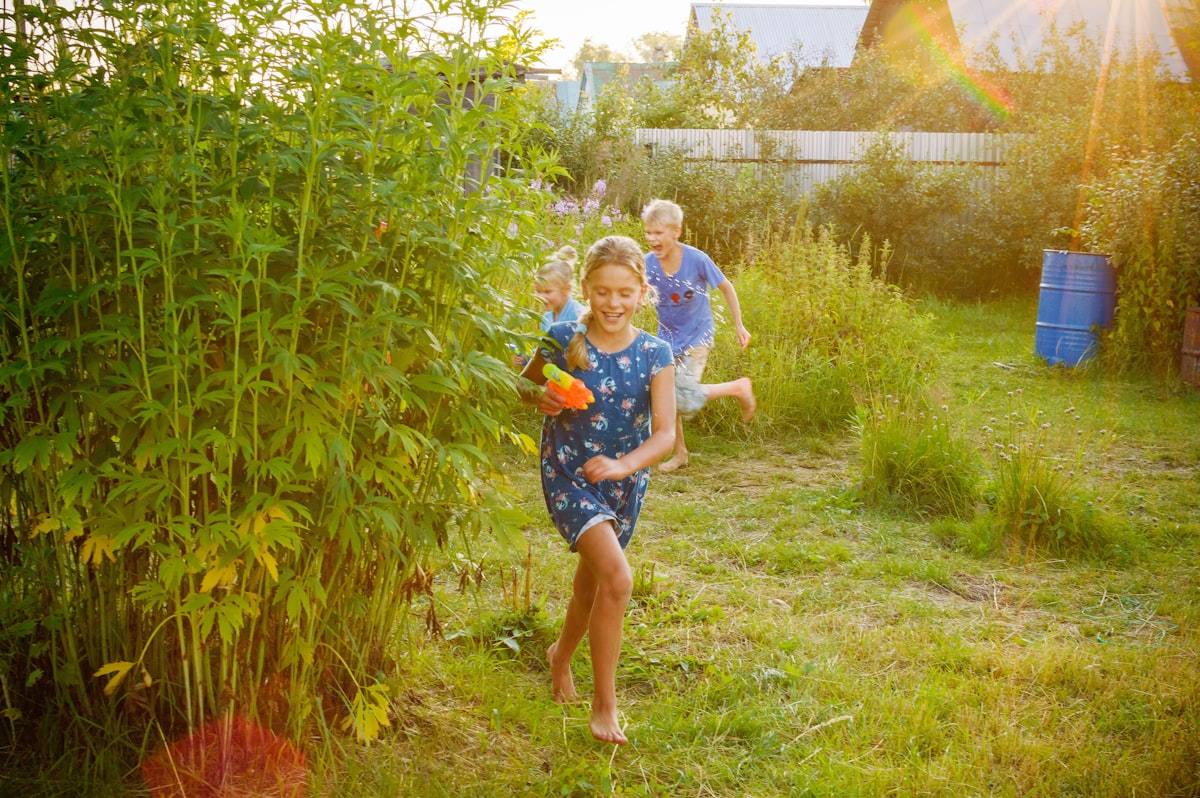
- Garden hose fun: On warm days, a hose and some old containers is all you need. Add rubber boots for extended play in cooler weather.
For days when the weather isn't cooperating but you still want to get outside, a good rain set changes everything. Check out our toddler outdoor clothing roundup for our current favorites in waterproof layers.
How to Set Up Your Backyard for More Independent Play

One of the best things you can do for your preschooler, and honestly, for yourself, is set the backyard up so that play can happen with less adult direction. The goal is what play researchers call a "loose parts" environment: a space where materials are accessible, varied, and inviting without requiring a grownup to run the activity.
A few things that make a real difference:
- Low, open storage: Bins or crates at kid height filled with outdoor tools, chalk, balls, and loose natural materials. If your kid can access it themselves, they'll use it more.
- A defined digging spot: Designate one area where digging is always allowed. Preschoolers are much more likely to dig happily, and not in the vegetable garden, if there's a spot that's clearly theirs.
- Somewhere to sit and pour: A water table, a low sensory tub, or even a simple plastic storage bin on a picnic table gives kids an activity anchor when they're looking for something to do but not quite ready to direct their own play.
- Shade and comfort: When you're comfortable watching, your kid plays longer. A decent outdoor chair or a shaded spot makes a bigger difference to the length of outdoor sessions than any piece of equipment.
The Children & Nature Network has excellent resources on designing home environments that support child-led nature play, worth a browse if you want to go deeper on this.
Frequently Asked Questions
Add these picks to your The Barefoot Bub registry
Build your outdoor childhood kit with everything we recommend.
Start Your Registry